


For Dominican-American families, raising a bilingual child isn't just a parenting preference, it is also a cultural act of love. Spanish is the language Abuela uses. It's the words in the songs your parents grew up hearing. It's the way your family says te quiero and means it differently than any English phrase can capture.
But keeping that language alive in an English-dominant world takes intention. School is in English. Cartoons are in English. Most of your child's friends speak English at home. Without deliberate effort, Spanish fades and with it, a piece of identity that's hard to recover later.
Bilingual books are one of the most practical and proven tools to keep both languages and both worlds alive.
What the Research Says
The science behind bilingual reading is clear and consistent. A few things researchers agree on:
Bilingualism strengthens the brain. Children who grow up switching between two languages develop stronger skills in attention, executive function, and cognitive flexibility. Their brains are constantly managing two language systems, and that workout pays off in school performance, problem-solving, and focus. (I Can Read Singapore)
A strong foundation in the home language supports the second language. One of the most common misconceptions is that Spanish at home will slow down English development at school. The opposite is true. Researchers consistently find that children with a solid base in their first language pick up additional languages faster and more confidently. (ParentChild+)
Early exposure matters. The window for language acquisition is widest in the first few years of life. Children exposed to two languages from birth develop natural fluency in both. The earlier you start, the easier it is.
Bilingual books specifically support dual-language learners. When books present text in both languages, side by side or woven together, children build vocabulary in both simultaneously, making connections between words and concepts rather than treating the two languages as separate systems. (First Book)
The Unique Challenge for Dominican Families in the U.S.
Dominican Spanish has its own rhythm. It's fast, expressive, packed with sayings that don't translate cleanly, and carries the full personality of the island. Dique. Bacano. ¿Qué lo qué? These aren't words you'll find in a standard Spanish textbook.
For Dominican-American kids growing up between two cultures, language is only part of the equation. They're also navigating identity, figuring out what it means to be Dominican when you were born in Michigan, or New York, or wherever you call home. They might speak English at school, Spanglish with cousins, and something in between at home.
Books that reflect that specific experience, not just generic "Spanish" books, but books rooted in Dominican culture, Dominican traditions, Dominican words, give kids something that standard bilingual books can't: the feeling of being seen.
That's why it matters to seek out books written by Dominican authors, featuring Dominican characters, and using the language the way Dominican families actually speak it.
When Should You Start Reading Bilingually?
From day one, and that's not an exaggeration.
Infants respond to the sound and rhythm of language long before they understand words. Reading aloud to a newborn in Spanish, English, or both builds the auditory foundation for language from the very first weeks. By the time babies reach 6 months, they're already distinguishing between different language sounds.
By age group:
0–12 months: Focus on sound and rhythm. Board books with simple, repetitive text in both languages are ideal. Touch-and-feel formats add sensory engagement that reinforces learning.
1–3 years: Introduce books with simple vocabulary tied to everyday Dominican objects, foods, and symbols. Toddlers learn best through repetition and connection to real life.
3–6 years: Story-driven picture books that model full sentences in both languages. Look for books where the narrative itself celebrates Dominican culture, not just the language.
6–10 years: Chapter books and adventure series that give kids longer, more complex stories to engage with in both languages. This age group responds well to relatable Dominican-American protagonists.
How to Use Bilingual Books Effectively at Home
Owning the books is only the first step. Here's how to get the most out of every read-aloud:
Read it twice. Read the English side first, then the Spanish or vice versa. This lets kids hear both versions of the same story and naturally connect the two languages.
Let kids choose the language. Some nights your child may want the English version. Other nights they're curious about the Spanish. Following their lead keeps reading feel like a choice, not a chore.
Point to familiar things. When a page features a tambora or a plátano or a güira, use the moment to connect the book to real life. "We have that at home!" or "Abuela makes that!" turns reading into a cultural conversation.
Use the words in daily life. When a child hears besando la mano in a book and then sees it happen at a family gathering, the word becomes real. Look for books whose vocabulary shows up naturally in your family's everyday routine.
Don't worry about perfect pronunciation. Many Dominican-American parents worry that their Spanish isn't "good enough" to read to their kids. It is. What matters is the exposure, the habit, and the message that both languages belong in your home.
The Best Bilingual Books for Dominican Kids
For Babies and Toddlers (Ages 0–3)
My First Dominican Book: Touch & Feel / Mi Primer Libro Dominicano By Jasdomin Santana
The only touch-and-feel board book designed specifically for Dominican babies. Sturdy pages feature textured elements, the Dominican flag, the güira, the tambora, paired with simple words in both English and Spanish. It's designed for tummy time and story time alike, and it's become a go-to baby shower gift for Dominican families who want their little ones to connect with their roots from the very beginning. Shop My First Dominican Book at jasdomin.com
For Early Learners (Ages 2–7)
Dominican ABCs By Jasdomin Santana
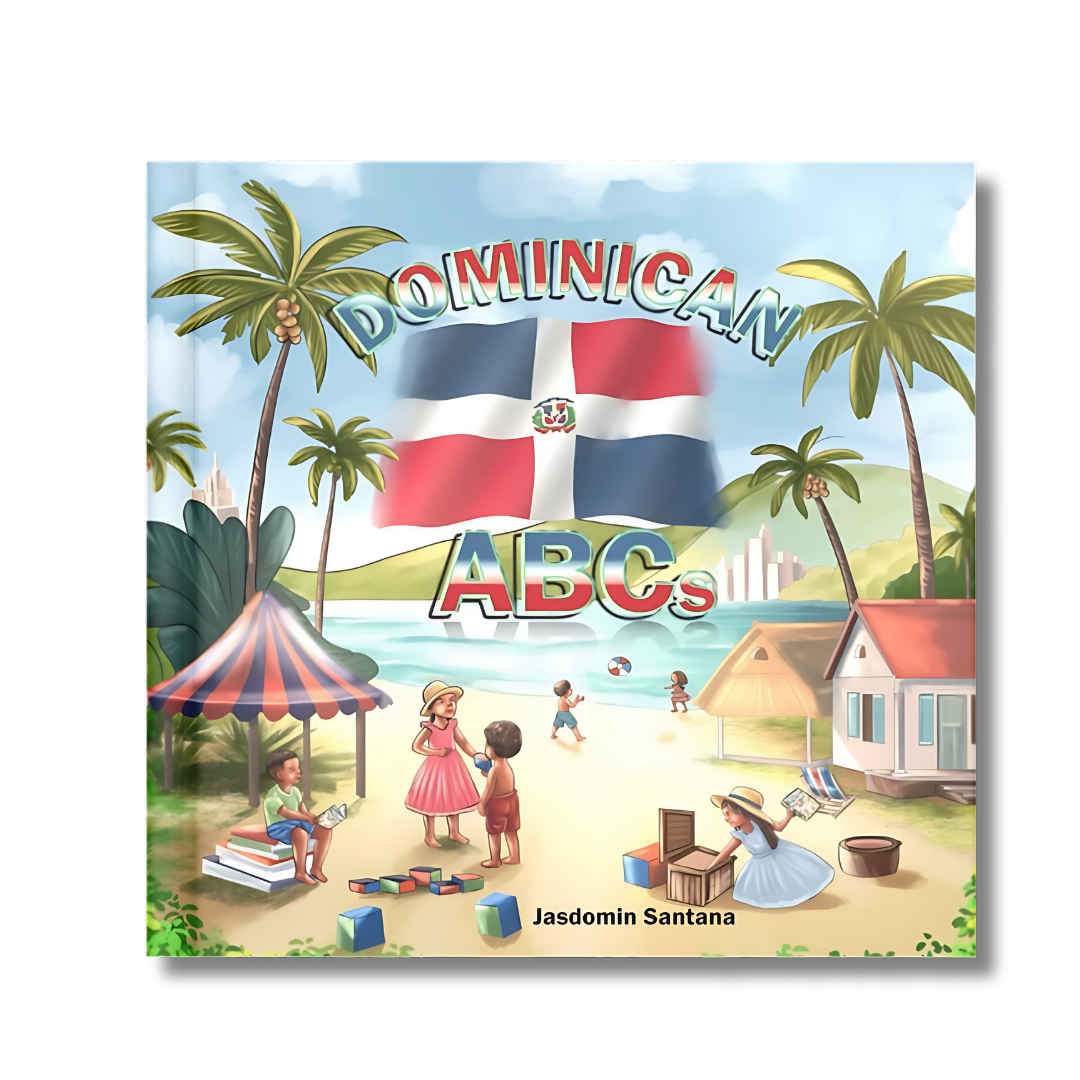
An alphabet book where every letter unlocks a Dominican word or phrase, A for Aguacate, B for Bacano, C for Concón, all the way to Z. Text appears in both English and Spanish, and the vibrant illustrations keep toddlers engaged page after page. It's one of the most fun ways to introduce Dominican vocabulary to young kids while they're learning the alphabet. Shop Dominican ABCs at jasdomin.com
Dominican 123 By Jasdomin Santana
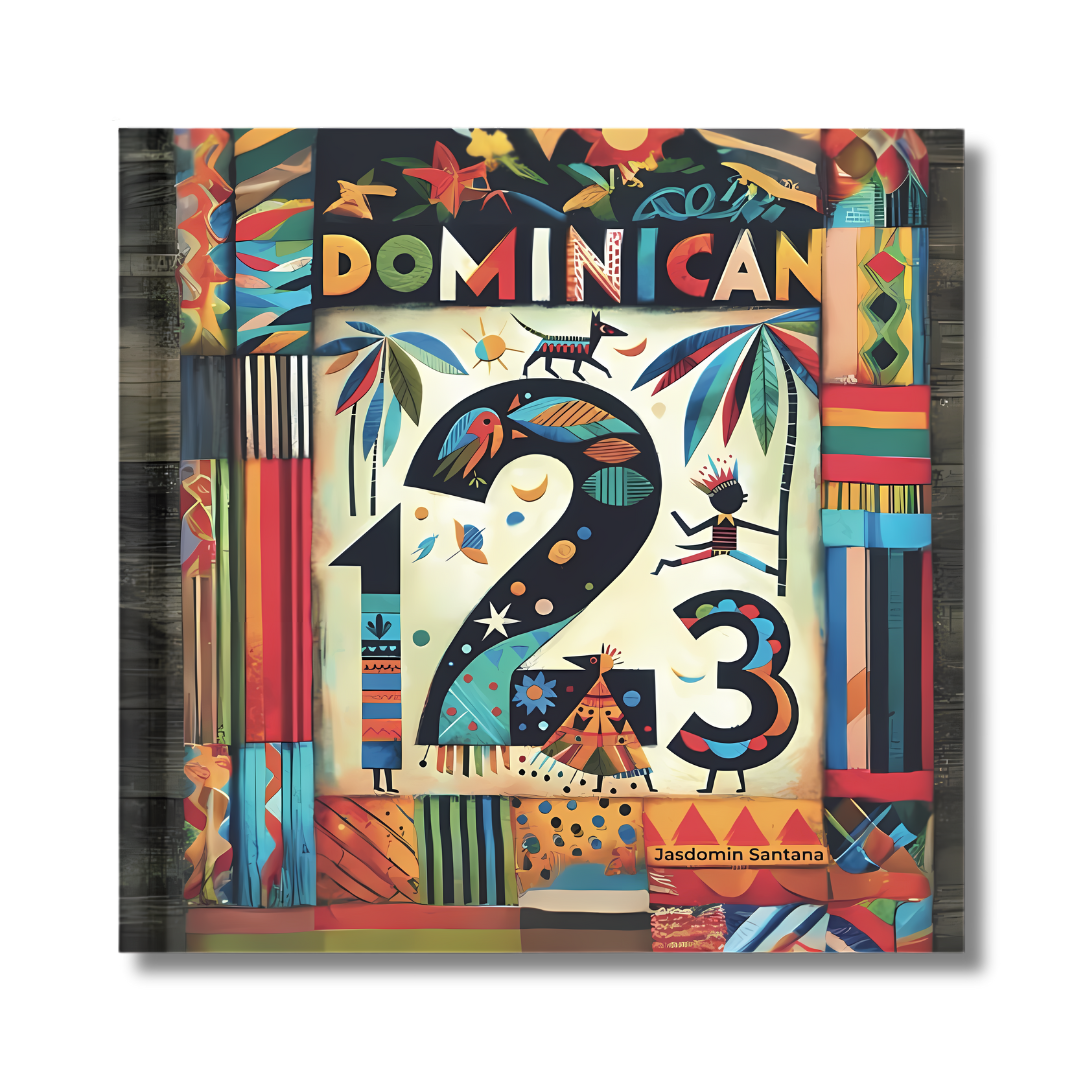
Counting from 1 to 25 using beloved Dominican symbols, plátanos, güiras, carnival masks, mentol, tamboras. Every page is bilingual, and every number is a mini celebration of Dominican culture. Perfect for kids learning to count in both English and Spanish at the same time. Shop Dominican 123 at jasdomin.com
For Picture Book Readers (Ages 2–8)
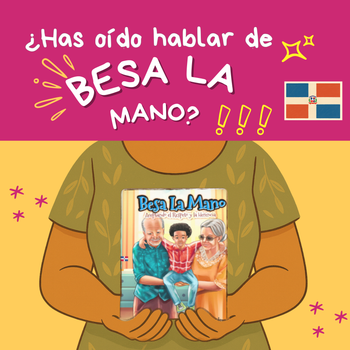
Besa La Mano: Embracing Respect and Heritage By Jasdomin Santana
Luis travels to the Dominican Republic and learns the tradition of besando la mano, requesting a blessing from elders as a sign of love and respect. The story is told naturally, through lived experience rather than explanation, which makes it perfect for kids who are navigating their Dominican identity. Shop Besa La Mano available in English and Spanish
Mangú Con Los Tres Golpes By Jasdomin Santana
A Spanglish story about Dominican breakfast foods navigating a new school and a bully named Cereal. It's funny, culturally grounded, and deeply relatable for kids who've ever felt like they exist between two worlds. The bilingual framing isn't a teaching device here; it's just how the characters talk, which is exactly how Dominican-American kids actually communicate. Shop Mangú Con Los Tres Golpes at jasdomin.com
My Mom Is Dominican: Sayings from the Heart By Jasdomin Santana
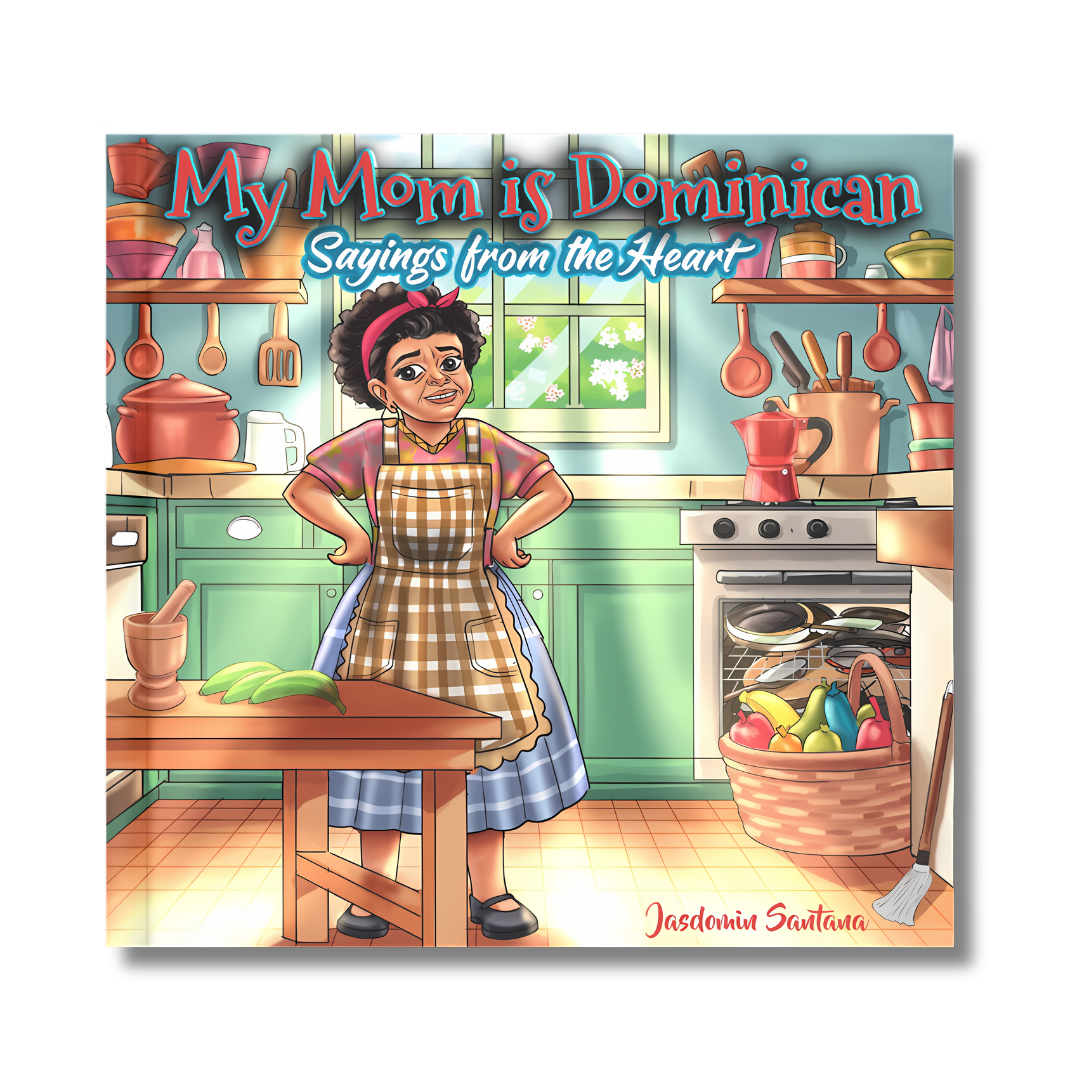
A collection of Dominican dichos, the sayings Dominican mothers have passed down through generations, presented in both English and Spanish. "¿Tienes hambre? Come alambre." Kids who grew up hearing these sayings will feel seen. Kids encountering them for the first time will be both confused and delighted. A beautiful bilingual gift for Dominican moms and abuelas too. Shop My Mom Is Dominican at jasdomin.com
Morir Soñando: The Dream Weaver By Jasdomin Santana
Named after the classic Dominican drink, this story follows little Ava on magical nighttime adventures with Abuela Rosa on the island, dancing with Guloyas, embracing a gentle Ciguapa, flying over moonlit beaches. Dominican folklore comes alive in a way that feels warm and intimate, not distant or academic. Shop Morir Soñando available in English and Spanish
For Growing Readers (Ages 2–10)
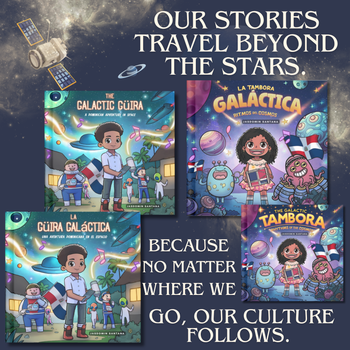
The Galactic Güira: A Dominican Adventure in Space (Trilogy) By Jasdomin Santana
Three books. One epic Dominican space adventure. Noah and Ava Santana travel across galaxies powered by Dominican music, merengue, bachata, tambora, accordion, the güira, all while facing cosmic villains and making alien allies. The trilogy is available in both English and Spanish, and it's the kind of series kids ask for the next book of before they've finished the first. Perfect for readers ready for longer, chapter-driven storytelling.
Shop the The Galactic Trilogy:
Güira: Available in English and Spanish
Tambora: Available in English and Spanish
Accordion: Available in English and Spanish
Tips for Families Where One Parent Doesn't Speak Spanish
A very common situation in Dominican-American households: one parent is fluent in Spanish, the other isn't. Here's what works:
One Parent, One Language (OPOL). The Spanish-speaking parent commits to speaking and reading only in Spanish. The English-speaking parent does the same in English. Kids become remarkably good at code-switching naturally between the two. (EF Education)
Lean on bilingual books. When you have access to books in English and Spanish, the non-Spanish-speaking parent can still participate fully in bilingual story time without needing fluency. They read the English side; the child hears both.
Don't wait until your Spanish is perfect. Many Dominican-American parents feel self-conscious about their Spanish... especially if they grew up primarily speaking English. Imperfect Spanish is still Spanish, and your child benefits from hearing it. The goal is exposure, not perfection.
Involve extended family. If Abuela or Tía speak primarily Spanish, make reading time with them a regular thing. Books give them a structured, comfortable way to share language and culture with grandchildren who may be more dominant in English.
Using Bilingual Books in the Classroom
For ESOL educators, bilingual books with Dominican cultural content are valuable in two specific ways.
First, they serve as mirrors for Dominican-American students, giving children who may feel caught between languages a chance to see their culture, their family's traditions, and their way of speaking reflected in a classroom setting. Research consistently shows that students read more willingly and more deeply when they recognize themselves in the text.
Second, they serve as windows for non-Dominican students, building cultural understanding and empathy in diverse classrooms without requiring formal cultural instruction.
Books like Dominican ABCs, Dominican 123, and Besa La Mano work especially well as classroom read-alouds because they're accessible, visually engaging, and spark natural conversation about culture, language, and identity.
For teachers looking to build a culturally representative classroom library, the full Jasdomin Santana collection is a strong starting point specifically for students with Dominican heritage or Caribbean-Latin American backgrounds. Pair it with Tiny Dominican Explorer (YouTube channel) and free digital download activities and you are all set!
Build Your Bilingual Dominican Library
The best bilingual library isn't the biggest one, it's the one that gets read. Start with one or two books that match your child's age and interests. Read them over and over. Let the words become familiar. Then add more.
Every book you add to your child's Dominican library is an investment in their language, their identity, and their connection to a culture worth celebrating.
Browse the full Jasdomin Santana collection at jasdomin.com.— from touch-and-feel board books for babies to space adventures for big kids, every book is written by a Dominican American author, rooted in Dominican culture, and designed to make heritage feel joyful.
¡Pa'lante, siempre pa'lante!

